


The Redemptorist Congregation Here
In 1929 our Diocese of Charlottetown was celebrating its centennial and one of its highlights that year was the coming to Charlottetown of the Redemptorist Order of priests. Bishop Louis O’Leary was anxious to have a religious order of priests in the diocese and so it happened that centennial year.
The Redemptorists were given a portion of the cathedral parish territory, its north-west side with Euston St. serving as one boundary. The first rector was Father Joseph McGreel, CSsR, an Ontario native, who along with his associate priests and enthusiastic laity got right to work at building their first church, fronting on Upper Queen Street, now the site of St. Jean’s elementary school.
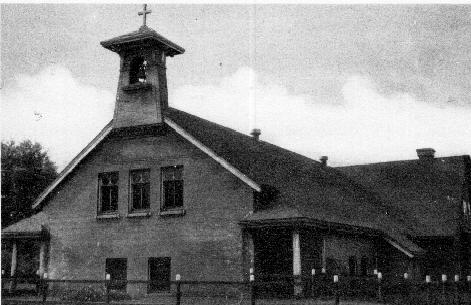
The new structure became a roomy, cozy basement church, unusual for PEI, spacious enough to accommodate 600 with a modest choir gallery which contained a sweet-sounding Hammond organ. With little lost time the new church, dedicated to the Most Holy Redeemer, was opened for Christmas Midnight Mass in 1929. Due to the absence of Bishop O’Leary because of illness, Vicar General MacLean of Souris officiated on this happy occasion.
The same year a large house at 73 Euston St. nearby was purchased for a rectory. That 1929 house-to-house census showed that 250 Catholic families were living within the parish boundaries. A spacious parish centre was built in 1951 on nearby Stewart St. and was very active for the growing parish. The church was particularly alive, not only with daily Masses and Confessions, but also with the well-attended Mother of Perpetual Help devotions on Tuesdays, other services and regular parish missions led by the booming voices of Redemptorist preachers from across Canada.
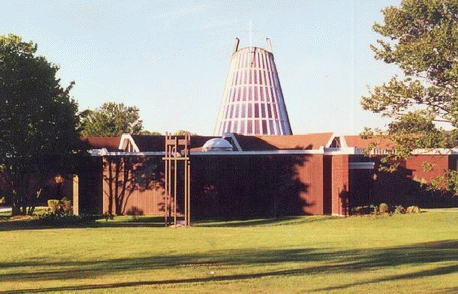
Overcrowding, poor parking areas and other reasons led to the building of the present lovely church on Pond Street in 1964 with rectory attached. A new hall across the driveway was constructed in the 1970s and later enlarged. Eventually, with a great decrease in Redemptorist vocations, the difficult decision was made to leave Charlottetown and thus in 1975 this great religious order terminated its 46-year presence in our diocese.
Over those good years some 40 Redemptorist priests served here at Holy Redeemer, often three or four at a time. For many it was a sad day to see the Redemptorists leave and our Island-born Redemptorist priests across Canada were particularly unhappy with this news. As well, upon leaving Charlottetown that last day, the younger CSsR priest on staff, a native of Saint John, in his unhappiness threw the rectory key overboard from the Borden-Tormentine car ferry into the swirling waters of Northumberland Strait. Who knows, maybe some day a fish will swallow that piece of metal and have it identified, like the shekel story in Matthew 17, 24 – 27.
An Island medical family
Thomas Grant was born at Peakes Station in 1876. He attended Prince of Wales College in Charlottetown and taught school for three years in Morell. Later he worked for five years at the Charlottetown Post Office, after which he pursued medical studies in Boston. He then practiced his medical skills in Cardigan, Vernon River and eventually in Montague which became his home base. Before long, however, he was drawn into the affairs of politics and in 1927 he was elected to the P.E.I. legislature and served in the cabinet until 1930. Turning to federal politics, he was a Member of Parliament for Kings County from 1935 to 1949 and of the Canadian Senate from then until 1965. Thomas married Minnie Donovan in 1902 and together they raised a family of 13 healthy children, known to be a full-blown Island medical family. Three sons became doctors, one a dentist and two were optometrists. Of the seven daughters, four were nurses, one a pharmacist and one a lab technician (who became a Sister of St. Martha here). The last daughter was a radical by becoming a very talented musician! Thomas Grant belonged to no fraternal organizations for he felt that they segregated rather than united society. Tom died at the age of 90 and Minnie at 88, with burial in St. Cuthbert’s Parish, St. Teresa.
Priests’ wills
In the late 1950s Bishop MacEachern recommended that priests should have their wills made. Progress on that was slow enough but in the early 1960s one of our younger pastors died without having a will, leaving the family and others awkwardly involved in the funeral arrangements. From that experience, the bishop demanded that all priests were to have their wills made, signed, dated, put into a sealed envelope and deposited in the chancery vault by September 1, 1963. This request was faithfully followed. As well, the bishop did not want priests drawing up wills for the laity or acting as their executors, a common custom here over many years.
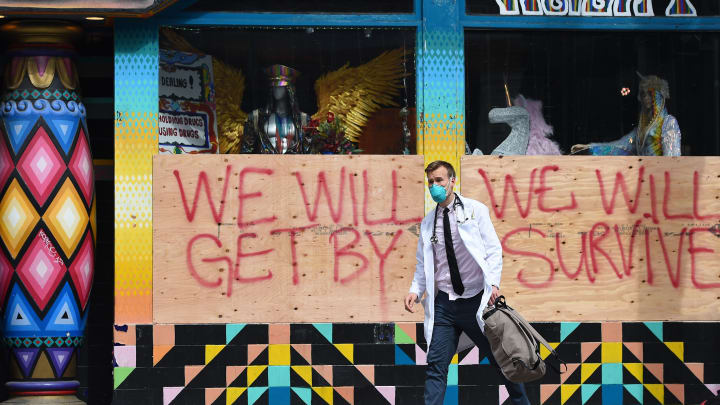
May this universal corona-virus wave lead eventually to a more caring world, less driven by nationality, power, wealth and an excess of false gods. Isaiah probably had these better days in mind when he foresaw nations hammering their swords into plowshares and their spears into pruning hooks (2,4), a world with the wolf and the young lamb feeding together (65,25).
Best wishes to our bishop and fellow priests here who are standing tall and finding fresh pastoral approaches as true shepherds on this new pilgrim way. May goodness and mercy be with all God’s people now and their whole life long. In a special way may this timely Easter season bring the world newborn hope for the Lord is truly risen, alleluia!
Father O’Shea’s Diocesan Reflections #48 April 15, 2020