


Holocaust over St. Margaret’s
Years ago, parishioners of St. Margaret’s in Kings County had many of their dwellings, as well as their church and rectory, down close to the shore. As new land got cleared and better roads developed, more and more people settled farther inland. It thus became advisable, as well, to move the church and its other buildings upwards to today’s location.
This move, upland about a mile, took place in 1894 and gradually everything was nicely in place again. But alas, on June 10th, 1921, a massive forest fire enveloped that area and the best efforts of all could not halt its vicious rush. Very quickly, the church, parochial house and farm buildings became piles of ashes. Only the parish hall was saved.
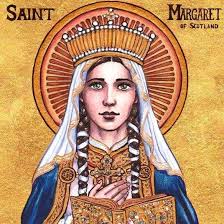
Two interesting connections to that fateful day are here noted. One was that the pastor, Father MacPherson, was visiting his old homestead in Vernon River that day and learned of the holocaust down there. Secondly, that blazing June 10th day just happened to be the feast day of the parish, St. Margaret of Scotland.
However, with great courage and determination the pastor and parishioners got to work. The saved hall was fitted up in two ways: one floor was arranged as a temporary residence for the pastor while the other floor became a neat locale for the temporary church.
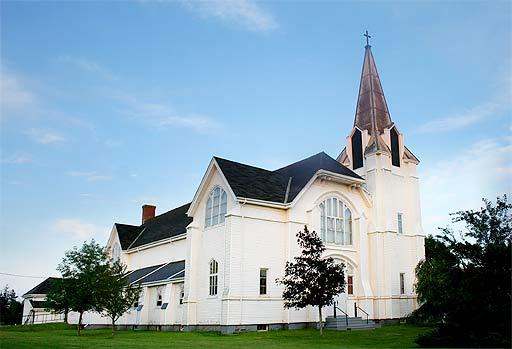
The present parochial house was finished in 1922 (sold in recent years) and the new church opened in 1926, the complete finish of which took a few years to accomplish. Today it is one of our many beautiful rural churches, inside and out. Well done parishioners for maintaining much faith and hope to the dawning of a new day.
Exams for new priests
One of the requirements of the new Code of Canon Law, promulgated in 1918, was that there be an examination of priests for three years after their ordination, no doubt to keep these younger clergy from becoming lax too soon in their intellectual lives.
Bishop Louis O’Leary announced not long thereafter that these examinations would take place at the bishop’s residence in May each year. The examiners for the 1920s, for example, were Fathers Gregory MacLellan, Nazaire Poirier and Dan Croken.
It was clear that these newer priests had a course of studies to follow: a review of their seminary materials, along with newer theological issues of the day. In the years long past, some Island Catholics had the feeling that the newly-ordained were not fully priests yet and to become so they had further study to do!!
These extra studies and examinations surely strengthened that idea. In any case, by the 1960s Bishop MacEachern dispensed with this tradition but with a new twist. Instead of exams, newly-ordained priests were to give the bishop a list of theological and spiritual books they had read each year. How that turned out we are not so sure but at least it was a good try.
Diocesan Year Book
In 1931, his first year here, Bishop O’Sullivan arranged for the publication of a diocesan year book, intended for the eyes of the clergy only, but a neat historical snapshot of our diocese year by year.
In those earlier years our diocese had a block of excellent institutions in progress, such as St. Dunstan’s University, the Charlottetown Hospital, the Sacred Heart Home for the elderly, St. Vincent’s Orphanage and an excellent long-standing priests’ retirement fund begun by the clergy themselves.
As large as nearly 30 pages at times, this publication drew together a generous listing of diocesan and parish statistics all within a compact format. Although at least some of this information had been supplied in earlier years in more scattered pages, this newly-arranged yearbook surpassed them all.
This annual publication is with us still, nearly 90 years of age now, although much smaller in scope, due to the closure of those high-cost institutions mentioned above with their detailed reports.
P.E.I. priests away who served as Vicar General
Edmund Donahue, Edmonton
Peter Dunphy, Winnipeg
Edgar Gallant, Juneau, Alaska
Joseph Gillis, Burlington, USA
Adolphus MacAulay, Tulsa, USA
Ivan McCormack, O.M.I., Prince George
James McGuigan, Edmonton (later cardinal)
Fred Monaghan, Nelson
Leo Nelligan, Edmonton (later bishop)
Nicknames of priests, Diocese of Antigonish
Alex MacDonald, the Devil
Bernie MacDonald, bulldog
Paul MacDonald, gunner
Roddy MacDonald, makins
“We always find that those who walked closest to Christ were those who had to bear the greatest trials.” (Saint Teresa of Avila)
March 10th, 2020 #47